






Negative Impact of Social Media on Consumer Behaviour in 2026
Over the past few years working in digital marketing, I’ve noticed one major shift in the way consumers make decisions: people no longer buy products the way they used to. Before social media dominated our daily lives, consumers typically spent time researching products, comparing options, reading reviews, and making logical purchasing decisions. Today, most buying behavior is driven by emotion, speed, social influence, and digital validation. Platforms like TikTok, Instagram, YouTube, and Facebook have completely transformed the relationship between brands and consumers. While social media has created incredible opportunities for businesses to grow online, it has also introduced a darker side that many marketers rarely discuss openly. From my experience managing campaigns and analyzing audience behavior, the negative impact of social media on consumer behaviour

How AI is Changing Consumer Behaviour in 2026
Over the past few years working in SEO and digital marketing, I’ve realized that artificial intelligence is no longer just supporting marketing strategies — it’s actively shaping how consumers think, behave, and make purchasing decisions online. What fascinates me most is that many consumers don’t even realize how deeply AI influences their daily behavior. Every time someone opens TikTok, scrolls Instagram, shops on Amazon, or searches on Google, artificial intelligence is working behind the scenes analyzing interests, predicting behavior, and deciding what content or products should appear next. From my experience managing campaigns and analyzing user behavior across different industries, I can confidently say that AI has completely changed the psychology of modern consumers. People no longer discover products naturally the way they did a
15 Technical SEO Tips to Improve Your Website Performance in 2026
If you’ve ever wondered why some websites rank effortlessly while others struggle to even get noticed, the answer often comes down to one thing: Technical SEO Tips. Technical SEO is the backbone of your websiteو it focuses on everything happening behind the scenes, from site speed and crawlability to indexing and overall user experience. Without it, even the best content can remain invisible to search engines. From my experience at Maps of Arabia, I’ve seen countless websites with strong content but weak technical foundations, which basically means Google is trying to read a book with missing pages. That’s where Technical SEO Tips become essential, as they directly impact how search engines understand, crawl, and rank your site, while also shaping how users interact with it.
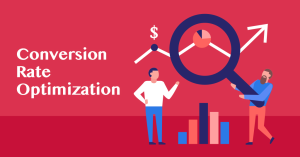
5-Step Conversion Rate Optimization Audit Process to Improve ROI
In my experience working with healthcare and MedTech brands at Maps of Arabia, I’ve seen a recurring mistake across most businesses: they focus heavily on driving traffic through SEO and paid ads, but they completely overlook what happens after the click. High traffic alone does not translate into high revenue, especially in competitive industries where user intent and trust play a critical role in decision-making. This is exactly where a conversion rate optimization audit becomes essential. It is a structured analysis of how effectively your website turns visitors into actual leads or patients, identifying the gaps that prevent users from taking action. In healthcare, MedTech, and even e-commerce, this matters even more because users are not just browsing, they are making high-stakes decisions where trust,
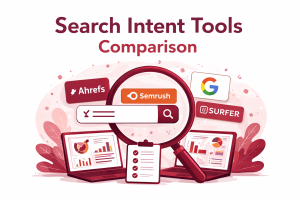
Search Intent Tools Comparison: Best Tools for SEO Intent Research in 2026
Most discussions around search intent tools start in the wrong place. They focus on features, dashboards, and tool comparisons—without addressing the real problem. Because after working on multiple SEO campaigns at Maps of Arabia SEO Agency, across different industries and markets, one thing becomes clear very quickly: The issue is not the lack of tools. The issue is misunderstanding how search intent actually works—and how tools should be used within that system. You can use the best tools for search intent analysis available today and still produce content that doesn’t rank or convert, simply because the interpretation layer is missing. And this is exactly where most SEO strategies fail. The Core Problem: Tools Don’t Understand Intent—People Do Most SEO tools today claim to classify keywords

MENA Consumer Behavior: Why Most Businesses Misunderstand How People Actually Buy
Most businesses entering the Middle East make the same mistake. They assume consumer behavior in MENA works the same way it does in Western markets. Same funnels. Same messaging. Same conversion logic. And on the surface, it seems to work — you get traffic, some engagement, maybe even leads. But when you look deeper, performance always plateaus. Conversion rates stay inconsistent. Customer acquisition becomes expensive. Growth becomes unpredictable. After working on SEO and digital strategy projects at Maps of Arabia SEO Agency, across clinics, service businesses, and digital platforms in the region, one thing becomes very clear: The problem is not marketing execution. The problem is misunderstanding MENA consumer behavior at its core. The Core Problem: MENA Consumer Behavior Is Treated Like a Western
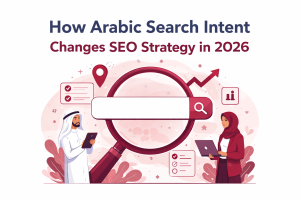
How Arabic Search Intent Changes SEO Strategy in 2026
At Maps of Arabia SEO Agency, we’ve stopped treating keywords as the starting point of strategy. Instead, we treat them as the output of Arabic search intent. Because when you reverse the process, everything changes. Instead of asking: “What keyword should we target?” We now ask: “What is the user trying to solve — and how do they express that in Arabic?” This shift alone has been responsible for some of the most consistent performance improvements across our campaigns. Especially in competitive sectors like healthcare, local services, and SaaS. The reality is simple: If your content is built on translated keywords instead of real intent, you are not competing in SEO. You are competing in a language guesswork exercise. And that is not scalable. The
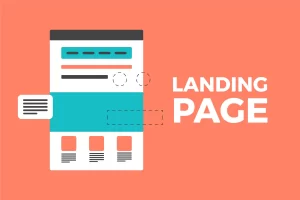
Arabic Landing Pages That Print Money in 2026
Let me say something most agencies won’t, Arabic Landing Pages are one of the most underutilized growth assets in MENA, and at the same time, one of the easiest to get wrong. Everyone is copying American-style funnels, templates, and “best practices,” then wondering why conversion rates are low. The problem is not design. It’s not even traffic. The problem is that Arabic Landing Pages are being built for the wrong behavior. Arabic users don’t navigate, read, or decide the same way, and if your page doesn’t reflect that, it doesn’t matter how “optimized” it looks. Why Most Arabic Landing Pages Don’t Convert From experience, most Arabic Landing Pages fail before the user even scrolls. The messaging feels translated, the structure feels imported, and the flow
Arabic Traffic Without Ads: How We Scaled from 0 to 100K Monthly Organic Sessions
Let me say this the way I say it inside audits, Arabic Traffic Without Ads is not magic, and it’s definitely not “good content” randomly ranking. It’s engineering. Most businesses are stuck in a loop where they believe growth equals budget: more ads, more spend, more temporary visibility. But the reality is, ads don’t build assets, they rent attention. What we did here was the opposite. We built a system that generates Arabic Traffic Without Ads consistently, predictably, and at scale. This client went from being completely invisible on Google to crossing 100,000 monthly organic sessions in just 7 months. No campaigns. No paid boosts. Just structure, execution, and understanding how Arabic search actually works. The Starting Point: Invisible, Not Broken When we first analyzed
Arabic SEO Content: Why Ours Performs Differently (And Why Most Content Fails)
Let me be very honest, most Arabic SEO Content online today is not built to perform, it’s built to fill space. It looks fine on the surface, it reads “okay,” and it ticks a few SEO boxes… but it doesn’t rank consistently, and more importantly, it doesn’t convert. Why? Because it’s treated like a writing task instead of a strategic system. Agencies translate English ideas into Arabic, maybe adjust a few keywords, publish the page, and move on. But Google doesn’t reward effort, it rewards clarity and structure. That’s why when we build Arabic SEO Content, it behaves differently. Not because it’s prettier, but because it’s engineered from the ground up to align with how users think and how search engines interpret. Arabic SEO Content
Best SEO Strategy in MENA: How We Reverse Engineered Arabic Search Behavior to Dominate Rankings
Let me start with something most agencies won’t admit: the Best SEO Strategy in MENA is not built on keywords it’s built on behavior. Anyone can translate keywords into Arabic, plug them into pages, and call it “localized SEO.” That’s not strategy, that’s surface-level work. What we did at Maps of Arabia was fundamentally different. We stepped away from keyword obsession and focused on understanding how users actually behave once they land on a page, where they look, what they skip, how fast they scroll, and what makes them trust or leave. That shift alone is what unlocked the real Best SEO Strategy in MENA. Why the Best SEO Strategy in MENA Starts With Behavior, Not Translation The biggest misconception in the industry is that
Arabic GMB optimization: The Blueprint Behind Local Pack Dominance in Arabic Markets
Let me be direct, Arabic GMB optimization is not about “filling in your Google Business Profile and hoping for the best.” If that worked, every clinic, salon, and restaurant in the region would be ranking. They’re not. And the reason is simple: in Arabic-speaking markets, nearly 40% of GMB data is misconfigured, inconsistent, or just wrong. That chaos is exactly where Arabic GMB optimization becomes a competitive advantage. Why Arabic GMB optimization Is Different in MENA From experience, Arabic GMB optimization behaves very differently from Western local SEO. The algorithm is the same, but the data feeding it is not. Arabic naming inconsistencies, poor translations, duplicate listings, and missing fields create gaps, and Google doesn’t fix those gaps for you. It rewards the profiles that